Everyone “wants to start a gaming channel.” Nobody wants to admit they’re planning to stream to three viewers — one of them being their second account.
If you’re 18–25 in India, you’ve watched at least one creator go from random hostel guy to semi‑celebrity just by playing games and shouting into a mic. It looks stupidly simple from the outside. Play. Talk. Upload. Profit. Then you open OBS, go live with a random game, and realise the internet does not care that you exist.
This site is about tech and digital life the way we actually use it — Indian data packs, low‑mid phones, parents still asking “yeh gaming se kya hota hai,” and you trying to figure out if this niche can pay for at least your Wi‑Fi bill. So let’s talk about which gaming niches are actually dominating growth, views, and revenue in 2026, based on how people watch, what sponsors pay for, and where the Indian gaming market is headed
THE THING NOBODY ACTUALLY SAYS OUT LOUD
Here’s the ugly secret: “gaming” as a niche is terrible; specific gaming niches are where the money and growth live.
When people say “I want to be a gaming YouTuber,” what they usually mean is “I will stream whatever I feel like today and somehow the algorithm will adopt me.” Meanwhile, reality is sitting in the corner like, bro, that’s not how this works. YouTube and Twitch are flooded with generic gameplay. The channels that grow fast are almost never “variety” from day one — they’re hyper‑focused on one game, one format, or one angle until they become someone.
Look at live‑streaming numbers. In 2025, first‑person shooters were the most popular genre on live streaming with around 4.6 billion hours watched, followed by action‑adventure and MOBAs around 3.8 billion hours each. On Twitch, the same old gods still dominate: League of Legends, GTA V, Counter‑Strike, Valorant, Fortnite, Just Chatting. This is not a meritocracy; this is a popularity pyramid. New games and niches can blow up (ARC Raiders pulled 129M hours in its first 30 days, for example), but they’re fighting giants.
Now layer India onto this. The India gaming market was valued at about USD 4.38–5.91 billion in 2025 and is forecast to roughly double or more by early 2030s, with mobile gaming driving over 80% of revenue and a projected market of USD 9.89–16.72 billion depending on the report. Mobile phones under USD 100 and cheap data (around ₹200/month packs) are pulling millions of new players in. That means your audience is:
- Heavily mobile‑first.
- Living inside BGMI‑style battle royales, Free Fire alternatives, and casual games.
- Not necessarily interested in ultra‑niche PC indies.
Most polished “what niche to pick” guides either talk from a Western PC‑heavy perspective, or they just list broad labels: “FPS,” “RPG,” “Battle Royale,” like that helps you choose what to stream this Friday. They rarely say the one line that matters: your niche is not just a genre; it’s a combo of game + content format + audience you actually understand.
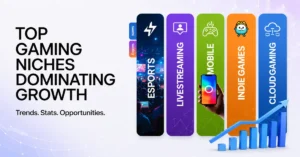
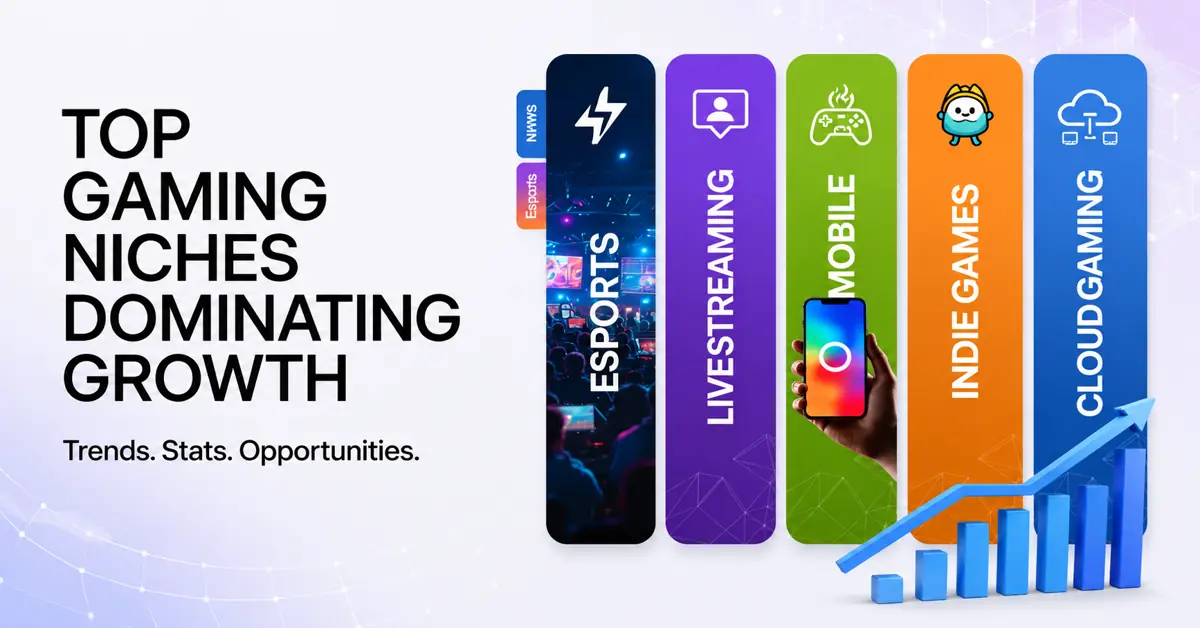
The real dominance in 2026 is coming from corners like:
- Long‑established games with huge live‑stream demand (LoL, GTA V, Counter‑Strike, Valorant).
- Fast, watchable formats like speedruns, challenge runs, and short‑format educational breakdowns.
- Mobile‑first content aimed squarely at markets like India, with mid‑tier hardware and UPI‑centric monetization.
If your entire strategy is “I’ll just be entertaining,” you’re basically trying to speedrun burnout.
HOW THIS ACTUALLY WORKS THE REAL MECHANICS
Let’s break down how “dominating niches” actually dominate. It’s not just vibes and lucky clips. It’s a mix of discoverability, watch time, and how brands see you when they open their spreadsheets.
At a platform level, YouTube and Twitch care about:
- How long people watch your content (session time, retention).
- How often they click your stuff (CTR).
- How consistently you upload or stream.
- Whether viewers come back to you or just the game category.
At a money level, you have three main sources:
- Ad revenue (RPM/CPM): Gaming CPM is usually lower than finance or business, around the ~USD 2–5 range in many reports, but can go higher for certain gaming‑adjacent niches like tech or productivity.
- Sponsorships & brand deals: Gaming gear, energy drinks, mobile brands, indie devs, and apps all pay for integrated content, and rates depend on your audience quality, not just views.
- Direct support: Superchats, memberships, Patreon, brand collabs, tournaments, affiliate links.
Where do niches come in? They change:
- How easy it is for new viewers to find you (search vs recommendation).
- How expensive your audience is in advertiser eyes (CPM).
- How replaceable you are (is it “any BGMI streamer” or “that guy who explains FPS aim like a coach?”).
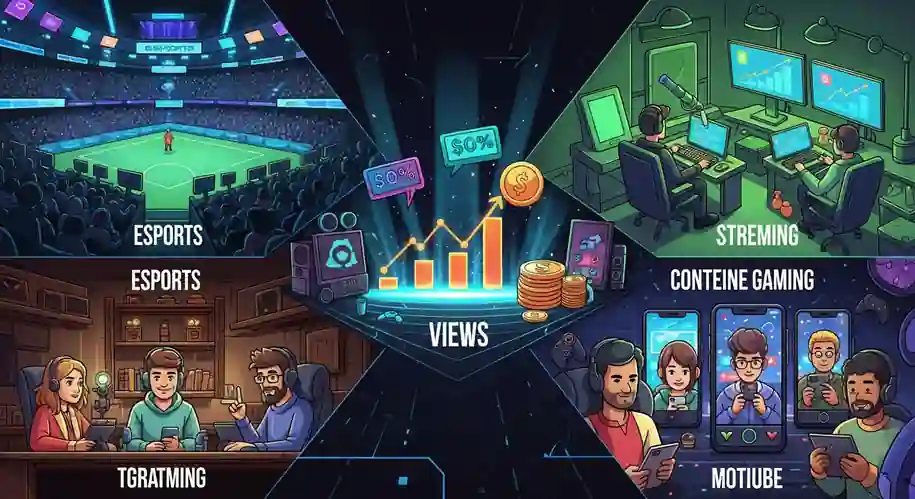
Most‑discussed gaming niches that combine growth + views + revenue right now include things like challenge runs, speedrunning, live service meta content, educational breakdowns (“how to improve in X”), and reaction/analysis content around big titles. Meanwhile, the India market is blowing up on mobile‑first content: walkthroughs, budget‑phone optimization, and game discovery for mid‑range hardware.
Here’s a short, opinionated list of “meta” niche types people ignore:
- “Evergreen meta” niches
Content around games that never die — LoL, GTA, Counter‑Strike, Minecraft, Roblox, major battle royales — keeps pulling views year after year. You’re competing with monsters, but if you carve a sub‑niche (coaching, roleplay, challenges), you can ride that wave for a long time. - “How to get better” education
Aim guides, sensitivity settings, device optimization for mobile games, rank climb breakdowns — these are search‑friendly and monetizable because they attract serious players, not just casual watchers. - “Gaming + money/market” intersection
Content around gaming business, in‑game economies, esports career guides, or “is this game worth your time/money?” sits closer to higher CPM education/finance niches. Lower views maybe, but better revenue per view. - Mobile‑only niches in India
Reviews and guides for mid‑range phone gaming, Indian esports scenes, regional language commentary around popular mobile titles — huge audience, under‑served outside Hindi/regional channels.
Once you see these mechanics, “top gaming niche” stops being a vibe and starts being a strategy decision: what kind of attention do you want, and who’s going to pay for it later?
COMPARISON WHAT’S ACTUALLY DIFFERENT BETWEEN YOUR OPTIONS
Here are some major gaming niche archetypes that dominate growth, views, or revenue right now.
| Niche archetype | What it actually does | Who it’s for | The catch |
| Evergreen single‑game mains | Focus on one huge game (LoL, GTA, BGMI, Valorant, CS) | People who can live in one game for years | High competition; burnout risk; slower to pivot to new games |
| Skill/education & guides | Tutorials, aim guides, sensitivity, rank climb, device settings | Analytical players who like breaking things down | Requires real skill; audience calls you out if advice is trash |
| Challenge runs & speedrunning | Hardcore challenges, speedruns, no‑hit runs, weird constraints | Persistent, skilled players with patience | High skill + time; niche but loyal audience |
| Reaction/analysis & commentary | Reacts to game news, trailers, esports, drama, patches | Talkers with opinions and camera presence | Easy to become generic; relies on constant news flow |
| Mobile‑first India gaming (guides & reviews) | Focus on mobile games, mid‑range phones, Indian events | Indian creators with average hardware and local insight | Revenue per view may be lower; must handle a wide device range |
| “Gaming + money/career” hybrid | Talks about game economies, monetization, careers, market stats | Nerds who like data and gaming equally | More research; feels less “fun” but often pays better per view |
If you want a clear recommendation: pick one game or genre and combine it with one of the formats above — for example, “mobile FPS aim guides for Indian devices” or “GTA V challenge runs with commentary” — instead of trying to be a generic “gamer” channel.
WHAT ACTUALLY HAPPENS WHEN YOU TRY THIS
When you actually sit down and say, “Okay, I’ll pick a gaming niche and go serious,” reality feels very different from those “start your channel today” motivational videos.
You start with the obvious: pick a popular game. Maybe Valorant, BGMI, GTA Online, or an evergreen like Minecraft or LoL depending on what your PC/phone can handle. You stream, maybe upload a few highlight clips. At first, every view feels like a miracle. Then you notice a pattern the videos that are just “random gameplay with funny commentary” die silently, while the ones titled like “Best low‑end settings for BGMI on 4GB RAM” quietly get search traffic from people with phones like yours. That’s your first niche hint.
Then you check what dominates live‑streaming charts: League, GTA V, Counter‑Strike, Valorant, Battle Royale stuff, all clocking insane hours watched. You realise you’re not competing with one guy, you’re competing with an entire ecosystem of big creators, esports pros, and streamers who stream daily. The surprising bit is this: you don’t lose because they’re better; you lose because you’re indistinguishable. Your content is just “more of the same” instead of “this specific thing.”

When you start leaning into a more specific lane say, you start doing map breakdowns, aim drills, or device‑specific settings for Indian phones comments change. People start asking you, “Bhai, will this work on Redmi Note 10?” “Can you do one video for 3GB RAM phones?” That’s the pattern generic guides never mention: a niche reveals itself when viewers ask you ultra‑specific follow‑up questions.
On the revenue side, the first time you see ads actually pay you, it’s underwhelming. Gaming RPM is not finance RPM. Reports show that some niches like finance can hit USD 15+ CPM, while gaming often sits closer to USD 3–5 depending on country and format. You realise why so many big gamers push memberships, Superchats, brand deals, and join tournaments ads alone are like pocket money until you’re truly massive.
What genuinely surprised me the first time I dug into niche data: viewership loves incumbents more than new stuff. 2025 streaming stats show League of Legends still adding 4% YoY to reach about 1.95B hours watched, GTA V still around 1.9B, Counter‑Strike dominating FPS share. Even ARC Raiders, as a new game, grew huge only with hardcore community work. That means your fastest path to growth is usually not “discover a random niche game,” but “find a new angle on a game people already watch like crazy.”
When you try to mix gaming with education, market talk, or tech, you see something else. A video explaining “India’s gaming market growth” or “how mobile game monetization really works” may get fewer views, but brands and older audiences take you more seriously. You move from “just another streamer” to “someone who understands the space,” which is where consulting, speaking, and higher‑value sponsorships live.
The pattern other articles miss entirely: the India factor. Our gaming market is growing at around 14–15% CAGR with mobile responsible for 80%+ of revenue and over a billion smartphone users expected around 2026. That means:
- Mobile content = more potential audience.
- Regional language content = huge edge.
- PC content = smaller but higher‑spending niche.
Once you actually try to publish regularly, that’s when the real niche choice starts: do you want mass watch time with average pay, or fewer but richer viewers with gaming + something else? There isn’t one right answer, but pretending all gaming niches are equal is how people waste two years streaming into nothing.
THE ADVICE EVERYONE GIVES VS WHAT ACTUALLY WORKS
1. “Just play what you love, and your audience will find you.”
This sounds romantic and keeps you from crying for about three months. Then reality hits: the algorithm isn’t out here scouting “passionate gamers”; it promotes content that hooks and keeps people watching in niches that people are already searching for. If what you love is obscure, you’ll grow slower. If what you love changes every week, the algorithm doesn’t know who to send you to.
The realistic version: start from what you love, but lock it into a clear niche format — e.g., “mobile BR coaching,” “GTA V roleplay highlights,” “low‑end device optimization,” or “esports analysis for one game.” You don’t have to stream your soul every day; you have to deliver something specific consistently. Love keeps you going, but clarity gets you discovered.
2. “Variety channels are the most fun, I don’t want to be stuck in one game.”
For you, maybe. For a new viewer, “variety” just means “I don’t know what I’ll get when I click this channel.” Variety works once you have a strong personality brand first. The biggest streamers who hop between games usually built their audience on one game or one niche era then expanded.
Better play: treat variety as a future unlock. For the first 6–18 months, niche hard into one game or one tightly related set and one content format (guides, challenges, commentary). Once people show up for you instead of just the game, slowly bring in variety streams or secondary content. Until then, “variety” is a nice way of saying “confusing to the algorithm.”
3. “Gaming CPM is low, so there’s no money here; go do finance content.”
Yes, pure gaming CPM is lower than top niches like finance or B2B SaaS. But that doesn’t mean gaming is “bad money.” It just means your strategy has to go beyond ads. Esports, sponsorships, affiliate deals, UPI‑driven memberships, and brand collabs make gaming a multi‑stream income niche if you actually build trust and a clear audience.
The smarter approach: pick a gaming niche that either:
- Attracts higher‑value sponsors (peripherals, phones, internet, education brands).
- Or overlaps with higher‑CPM topics: game dev, tech breakdowns, market analysis, productivity, or career guidance. Suddenly you’re in “gaming + X” instead of “just gaming,” and your revenue per 1,000 views shifts.
4. “Just stream a lot; quantity beats everything.”
Streaming daily can help, but if you’re streaming to near‑zero viewers, you’re just practicing being invisible. Long streams with no retention, no hooks, and no niche positioning rarely convert into growth; they just burn your energy and data.
What works in 2026: hybrid strategy — stream enough to practise and build community, but clip/repurpose everything into short‑form content, guides, and highlight reels around a defined niche. Let shorts and searchable videos bring strangers in; let streams deepen the relationship. Quantity only matters when it’s aligned with a clear plan.
THE PRACTICAL PART WHAT TO ACTUALLY DO
1. Decide what “win” looks like for you
Are you chasing views, income, or a portfolio for future jobs (like esports, game dev, marketing)? Be honest. If you want fast views, you lean into high‑volume niches like BRs, GTA, or Just Chatting‑style commentary. If you want income, you lean into “gaming + education/market/tech.” That decision will filter which niches make sense for you instead of blindly copying your favourite streamer.
2. Choose one primary game or genre and one format
Pick a game or tight genre (e.g., “mobile shooters,” “GTA V,” “Valorant,” “Indian mobile games”) that fits your device and genuinely interests you. Then pick a format: guides, challenges, commentary, analysis, or news. Commit to that combo for at least 50–100 videos/streams. This doesn’t trap you forever; it just gives you a clear lane while you’re small.
3. Check demand and competition with real data, not vibes
Before committing, search YouTube and Twitch for your chosen combo. Look at:
- View counts on mid‑sized channels (not just giants).
- How many creators are doing exactly what you want to do.
- Whether there are obvious gaps (e.g., tons of English guides, fewer Hindi/regional ones, or almost no content focused on low‑end Indian phones).
If the niche is completely empty and the game is popular, that’s opportunity. If it’s empty because the game is dead, rethink.
4. Start with search‑friendly, India‑aware content
In your first 20–30 uploads, bias towards topics people type: “best settings for X on 4GB RAM,” “how to rank up fast in Y,” “is Z worth playing in 2026,” “best low‑end phone for BGMI under ₹15,000.” You’re not just chasing algorithm luck; you’re plugging directly into Indian gaming behaviour and device constraints. That’s how you get your first non‑friend viewers.
5. Layer short‑form and long‑form together
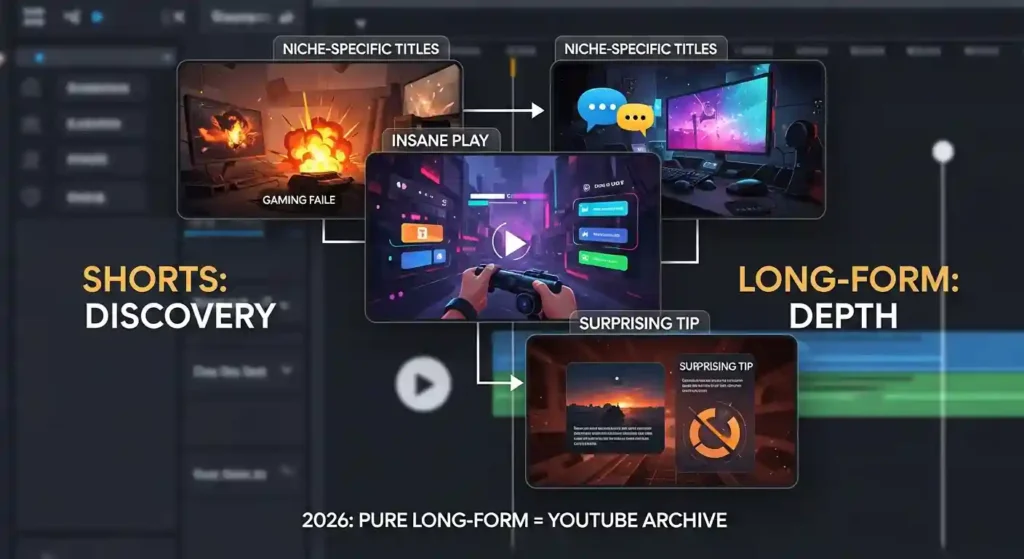
Treat every stream or long video like raw material. Clip the best 30 to 60 second moments fails, insane plays, funny callouts, surprising tips and post them as shorts or Reels with niche specific titles. Let shorts do discovery, long form do depth. In 2026, pure long‑form with no short‑form funnel is just making content for YouTube’s archive.
6. Monetize beyond ads early (even if small)
From the moment you have any audience, think beyond AdSense:
- Referral links for games, gear, data plans.
- Small brand deals with local cafés, colleges, or LAN/boutique stores.
- Coaching sessions for specific games if you’re actually good.
This forces you to think of your niche in terms of “who finds this valuable enough to pay?” instead of “how many random people clicked this?”
7. Reassess your niche every 3–6 months, not every 3–6 days
Every few months, look at your top 10 performing pieces. Identify patterns: which game, which format, which video structure, which titles. If you see that guides vastly outperform pure gameplay, lean further into guides. If Indian device‑specific videos outperform international‑style content, double down on that. Adjust the niche slowly based on data, not based on your mood on a random Tuesday.
QUESTIONS PEOPLE ACTUALLY ASK
What are the most profitable gaming niches in 2026?
Profitability depends on more than views it’s about CPM and sponsor interest. Pure gaming CPM often sits below niches like finance or business, but “gaming + tech,” “gaming + education,” and “gaming + market analysis” can tap into higher‑paying advertiser categories. For views, FPS, action‑adventure, and MOBAs dominate live‑streaming with billions of hours watched globally. The sweet spot is a niche that overlaps strong viewership (e.g., shooters, GTA, mobile BRs) with an angle that attracts better sponsors (guides, device optimization, esports analysis).
Which gaming niches are best for small YouTube channels in India?
For new Indian creators, mobile‑first niches often make the most sense: BGMI‑style guides, low‑end device settings, regional language commentary, and reviews of popular mobile games. These tap into India’s huge mobile‑dominated market where over 80% of gaming revenue comes from smartphones. Combining that with educational or “how to improve” content helps you rank in search rather than fighting giants in pure entertainment.
Are battle royale games still a good niche in 2026?
Yes, but they’re crowded. FPS and shooter genres (including battle royales) still bring some of the highest live‑stream view counts — FPS alone had about 4.6B hours watched in 2025. In India, mobile BRs remain huge thanks to affordable phones and cheap data. To stand out, you can’t just stream matches; you need a distinct angle like coaching, device optimization, off‑meta challenges, or local‑language, culture‑aware commentary.
Is it better to focus on one game or multiple games?
In the early stage, focusing on one main game or very tight genre nearly always helps growth more than pure variety. Algorithms and audiences both like knowing what to expect from your channel. Once you build a loyal base around that niche, you can slowly introduce variety content and see what sticks. Jumping between games too often at the start makes it harder for any viewer or algorithm to categorize you.
Do live streams or edited videos work better for gaming niches?
Edited videos are better for discoverability and search, especially tutorials, reviews, and highlights. Live streams are better for building community, parasocial connection, and driving direct monetization like donations and memberships. In 2026, most successful gaming creators mix both: they stream regularly and then clip or re-edit streams into shorts and focused videos around their niche.
How big is the gaming market in India right now?
Estimates vary slightly, but multiple reports place India’s gaming market value around USD 4.38–5.91 billion in 2025, with projections to reach roughly USD 9.89–16.72 billion by early 2030s, at around 14–15% CAGR from 2026 onward. Mobile gaming accounts for over 80% of this revenue, driven by over 800M smartphone users and rising towards 1B. Those numbers make India one of the fastest‑growing gaming markets globally — especially on mobile.
Which game genres get the most views on streaming platforms?
Stream analytics show that first‑person shooters, action‑adventure, and MOBAs are leading in live‑streaming hours watched, each pulling billions of hours annually. League of Legends, GTA V, and Counter‑Strike remain top performers, with GTA V alone accounting for about half of action‑adventure hours and LoL over half of MOBA hours. RPGs, MMOs, and other shooters still attract large audiences, but with more fragmented viewership.
Are non‑gameplay niches like analysis and news worth it?
Yes, especially if you care about monetization and longevity. Analysis, news breakdowns, patch explanations, esports coverage, and market commentary sit closer to education and tech niches in terms of advertiser value. They may not always get viral spikes like highlight clips, but they attract an older, more serious audience that brands are often willing to pay more to reach. It also positions you as an authority, not just another “funny moments” channel.
SO WHERE DOES THIS LEAVE YOU
You’re not short of gaming content ideas. You’re drowning in them. Every genre, every game, every trend looks like it could be “the one” if you just grind hard enough. That’s the trap.
The market in 2026 is already loud, and it heavily favours incumbents: old games like LoL, GTA, Counter‑Strike keep stacking billions of watch hours, while India’s mobile‑first audience keeps pouring into BRs and casual titles. Trying to brute force your way in as a generic “gamer” is like showing up to IPL trials with no position — coach asks, “batsman, bowler, all‑rounder?” and you say “I just love cricket.” That’s not an answer.
If you do one concrete thing after this, make it this: write down one game or genre you can stick with for at least six months, and one format you’ll commit to (guides, challenges, commentary, analysis). Then sanity‑check it against demand (are people watching it?), your device (can you actually run it?), and India’s reality (is this something Indian viewers with Indian hardware care about?).
The situation won’t be simple. Algorithms will be moody, growth will be uneven, and other people will always feel “ahead.” But once you stop thinking “gaming” and start thinking “this very specific gaming niche for this very specific kind of viewer,” the entire thing becomes less mystical and more like a long, annoying, but winnable game. Which, to be fair, fits the theme.
You made it to the end of a long article about niches, CPMs, and Indian gaming numbers without alt‑tabbing to YouTube once (I’ll pretend). That already puts you ahead of half the “I’ll start my channel someday” crew.
The messy truth is that gaming looks like an escape from structure, but the creators who actually make it treat it like a structured job: clear positioning, consistent format, data‑driven decisions, and a boring commitment to one lane long enough for people to notice. You’re allowed to keep it fun. You’re not allowed to keep it vague and then blame the algorithm.
If you treat your niche choice like picking a main role in a ranked game instead of randomly locking heroes every match, your odds go up immediately. It’s still grindy, still uncertain, and still full of people shouting in chat but at least now you’re playing with a strategy instead of just hoping your “passion for gaming” carries you.