Why Some Mobile Games Are Impossible to Put Down
Have you ever opened a mobile game just for five minutes and suddenly realized an hour has passed? That experience is not accidental. It is the result of best design decisions made by developers who understand psychology, behavior patterns, and user interaction at a deep level.
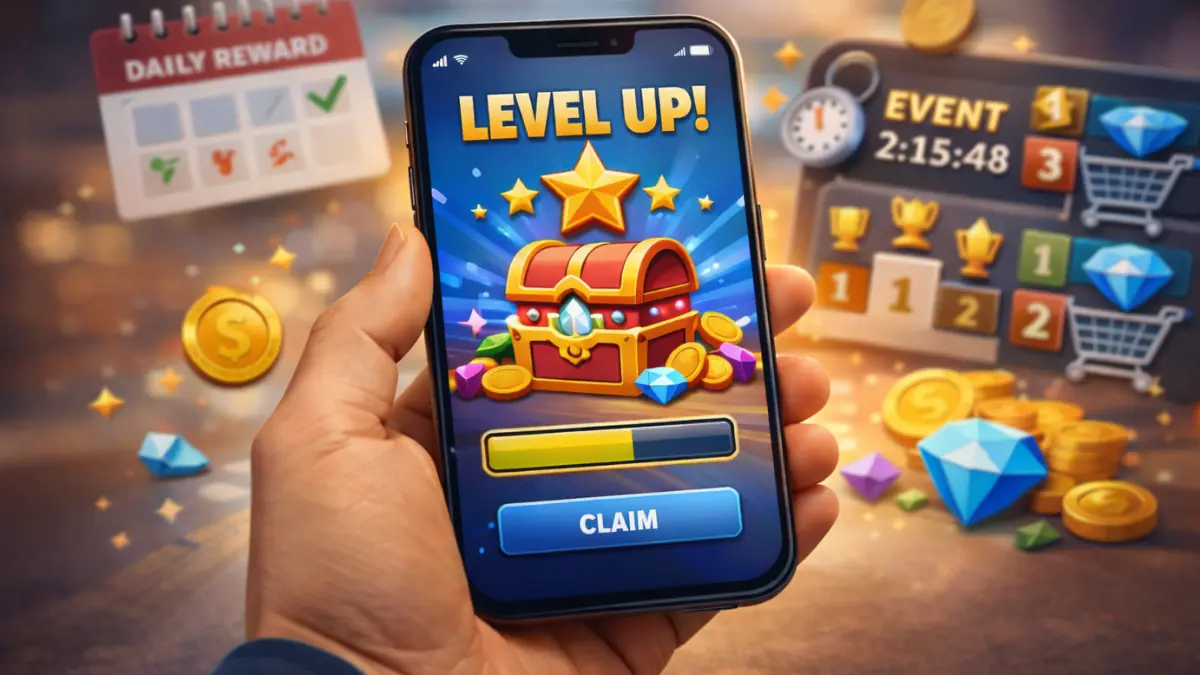
Mobile games are not just built to entertain. They are carefully engineered systems designed to capture attention, encourage repeat sessions, and build long term engagement. Behind every daily reward, level up animation, and timed event lies a structured engagement strategy.
In this article, we will explore how mobile games are intentionally designed to increase user engagement, what psychological principles are involved, how monetization connects to engagement, and what this means for players. This is not a top games list. Instead, it is a behind the scenes look at the mechanics that shape your gaming experience.
What Does User Engagement Actually Mean in Mobile Gaming?
In simple terms, user engagement refers to how actively and consistently players interact with a game. But in professional game development, engagement is measured more precisely:
- Session length like how long a player stays in one session.
- Retention rate like how often they return.
- Daily active users.
- Weekly and monthly retention.
- Interaction frequency.
- In-game activity depth.
Developers track these metrics because engagement directly affects a game’s success. A game that players open once and forget is unlikely to survive in today’s competitive market.
The Psychology Behind Engagement Design
Mobile game design is deeply connected to behavioral psychology. Many mechanics are influenced by reinforcement theories studied for decades.
1. Variable Reward Systems
One of the strongest engagement tools is the variable reward system. Instead of giving predictable rewards, games offer uncertain outcomes. For example:
- Random loot drops.
- Mystery boxes.
- Surprise bonuses.
This uncertainty triggers anticipation. The brain releases dopamine not only when receiving a reward but also when expecting one. The unpredictability increases excitement and motivates repeated play.
2. Progression Loops
Humans are naturally motivated by progress. Mobile games use clear progression systems which mainly consist examples like
- Experience points.
- Levels.
- Unlockable content.
- Rank systems.
When progress is visible, players feel a sense of achievement. Even small progress indicators, like filling a bar from 80% to 90%, create psychological satisfaction.
3. Micro-Goals and Short Tasks
Mobile games are designed for short bursts of play. Instead of long missions, they break gameplay into some micro-tasks:
- Like completing one level and goes into next level.
- Clear one puzzle.
- Upgrade one character.
These short goals create quick wins, encouraging players to continue playing just one more round.
The Core Design Systems That Drive Engagement
Beyond psychology, engagement is built into the structure of the game.
Daily Rewards and Login Incentives
Daily login rewards encourage consistency. Even if a player does not feel like playing, they may open the game just to collect a reward.
Developers carefully design these reward systems like examples below:
- Day 1: Small reward.
- Day 3: Better reward like increasing coins etc..
- Day 7: Premium reward.
Breaking the streak often resets progress, creating an incentive to return regularly.
Limited-Time Events
Timed events increase urgency. When players see Event ends in 24 hours, they feel pressure to participate immediately.
This strategy increases:
- Session frequency.
- Time spent in game by a player.
- Emotional involvement of an player.
Scarcity is a powerful motivator in human decision making.
Social Features and Competition
Many mobile games integrated with social systems for login:
- which provides a Leaderboards.
- Helps in playing Multiplayer modes.
- Guilds or clans.
- challenges between friends.
Competition increases engagement because players compare progress. Social accountability also motivates return behavior. If a player belongs to a team, they are less likely to abandon the game.
How Game Economy Influences Engagement
Game economy design is one of the most complex aspects of engagement.
Developers carefully balance:
- In game currency generation.
- Upgrading costs.
- Unlock requirements.
- Reward timing.
If rewards come too easily, players get bored.
If rewards are too slow, players get frustrated.
The balance must create tension without causing abandonment.
Free to play games especially rely on this balance. Engagement must feel rewarding, but also encourage long-term interaction.
The Role of Monetization in Engagement
It is important to understand that engagement is closely tied to monetization in many games.
Free-to-play games often use:
- Cosmetic purchases like dresses, gun skins etc..
- Battle passes.
- Optional upgrades.
- Premium currencies like diamonds etc..
However, successful games avoid aggressive paywalls. Instead, they design systems where engagement comes first, and monetization enhances experience rather than forcing it.
When monetization becomes too intrusive, engagement decreases. Players leave if they feel exploited.
The Science of Habit Formation in Mobile Games
Mobile games often aim to become part of a player’s routine.
Habit formation generally follows three steps:
- Trigger (notification or reminder).
- Action (open the game).
- Reward (coins, experience, win).
Push notifications are carefully crafted to act as triggers:
- Your energy is full.
- Your reward is ready.
- Your friend just beat your score.
Over time, these triggers form automatic behavioral loops.
Engagement Through Personalization
Modern mobile games increasingly use personalization.
Some systems adjust:
- Difficulty level.
- Reward frequency.
- Matchmaking strength.
Advanced personalization often relies on AI systems that analyze player behavior patterns. Companies researching such technologies, including organizations like OpenAI, contribute to broader advancements in adaptive systems, although individual game studios implement their own models.
Visual and Audio Feedback: Subtle but Powerful
Engagement is not only about mechanics. Sensory feedback plays a crucial role.
- Smooth animations.
- Reward sounds.
- Vibrations.
- Bright visual effects.
When a player wins or levels up, the game amplifies the moment with visual celebration. This reinforces satisfaction and increases memory association with positive outcomes.
Small details matter significantly.
Ethical Concerns in Engagement Design
While engagement strategies can enhance entertainment, they also raise ethical questions.
Some concerns include:
- Excessive time consumption.
- Targeting vulnerable users.
- Manipulative monetization systems.
- Encouraging compulsive behavior.
Responsible game developers consider long term player well-being. Sustainable engagement focuses on enjoyment rather than dependency.
Balanced design creates loyalty, while exploitative design damages trust.
How Developers Test Engagement Systems
Game studios do not guess what works. They conduct:
- A/B testing.
- Data analytics monitoring.
- User behavior tracking.
- Beta testing.
If players leave after level 5, developers investigate why.
If session length drops after an update, adjustments are made.
Engagement design is constantly optimized.
The Future of Mobile Game Engagement
Looking ahead, engagement systems are evolving with:
- Real-time AI personalization.
- Cross-platform progression.
- Deeper social integration.
- Augmented reality features.
However, the most successful games will continue to focus on one core principle: meaningful enjoyment.
Sustained engagement cannot rely only on psychological tricks. It must deliver genuine entertainment value.
Frequently Asked Questions
1. Are mobile games intentionally designed to be addictive?
Not all games aim for addiction, but many use engagement psychology to encourage repeated play. Ethical developers focus on entertainment rather than manipulation.
2. Why do daily rewards feel so motivating?
Daily rewards create routine and visible progress. The fear of losing a streak increases motivation to log in consistently.
3. How do free games make money without charging upfront?
They use optional purchases, cosmetic items, and premium passes while keeping basic gameplay accessible.
4. Does engagement design differ between casual and competitive games?
Yes. Casual games emphasize quick sessions and relaxation, while competitive games focus on rankings and mastery.
5. Can engagement systems become harmful?
If poorly designed, yes. Excessive pressure systems or aggressive monetization can lead to frustration or unhealthy habits.
Also Read: Why Some Apps Drain Battery Faster (And How to Fix It)
Also Read: How AI Is Transforming Mobile Apps: What Users Actually Experience Today
Conclusion:
Mobile game engagement is not random. It is blend of psychology, system design, economy balancing, and data driven optimization. From reward loops to social competition, every element serves a purpose.
Understanding how these systems work empowers players to make informed choices. It also highlights the complexity behind modern game development.
When designed ethically, engagement enhances enjoyment and creates memorable experiences. When abused, it can damage trust.
The future of mobile gaming depends on finding the right balance between intelligent design and responsible innovation.