Introduction
Mobile games generate large amounts of data every second. Every login, every purchase, every crash leaves a record on a server somewhere. Most players never think about this at all.
But this data powers everything. It drives matchmaking, monetization, and game design. It is invisible but it is always running in the background.
I reviewed a small Android game project during beta testing once. We removed analytics temporarily to test something. We immediately lost visibility into which devices were crashing and bug reports became pure guesswork.
That experience made one thing very clear. Some level of data collection is not optional. It is operationally necessary for modern mobile games to function properly.
This article breaks down exactly what is player data in mobile games collected and why. No unnecessary theory. Just what every player needs to know.
Why Data Collection Exists in Mobile Games
Modern mobile games are not simple offline apps anymore. They depend on many systems running simultaneously. Each system needs specific data to work.
Cloud saves need account data. Multiplayer servers need real time sync data. In-app purchase systems need transaction verification data.
Ad networks need attribution data. Anti-cheat systems need behavioral data. Crash analytics tools need device and error data.
Without data none of these systems can function. A multiplayer battle cannot sync without real time information. A purchase cannot be verified without a transaction record.
Core Categories of Player Data in Mobile Games
1. Account and Identity Data
When a game supports accounts it collects specific information. This includes email address, username, and unique player ID. It also includes authentication tokens and linked accounts like Google or Facebook.
Most authentication today uses token based systems. The game never receives your actual password. It only receives a verification token from the platform confirming your identity.
This account data enables cloud save synchronization and cross device access. It also enables friend lists and purchase restoration. Security logs record login timestamps for fraud detection too.
2. Device and Technical Data
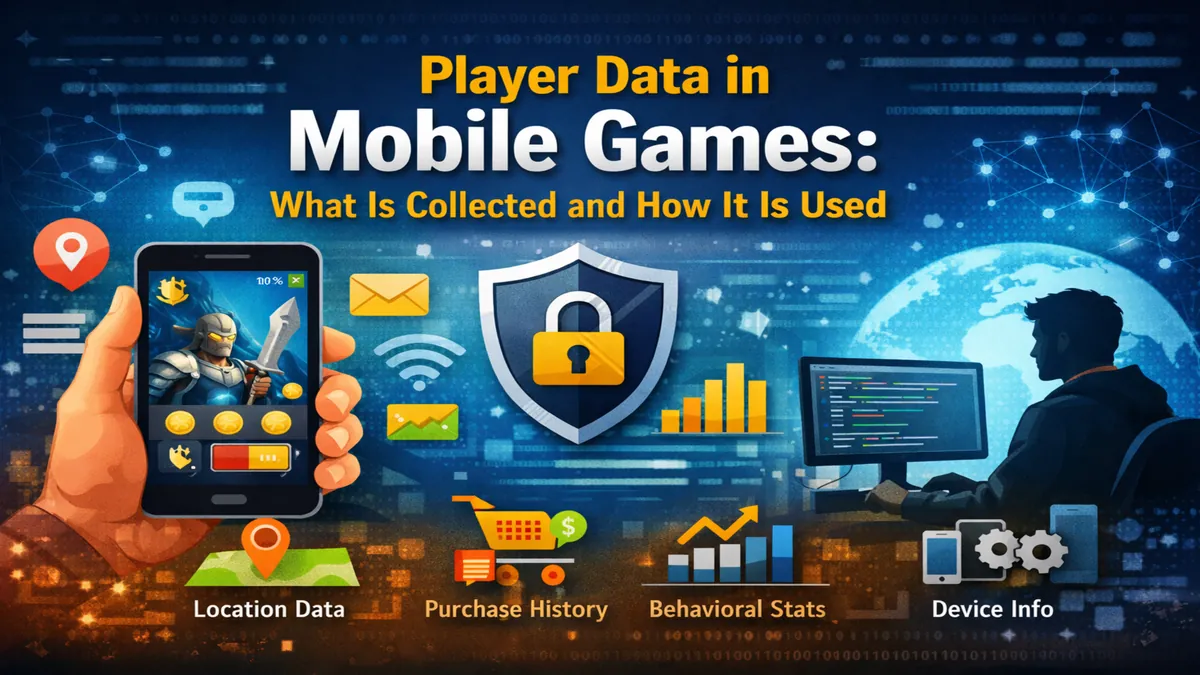
Mobile games collect technical metadata about your device. This includes device model, operating system version, and screen resolution. Language, time zone, app version, and network type are also collected.
This data helps developers identify performance problems. If crash reports show a specific Android build has higher failure rates, developers patch that version first. Without this data bug fixing becomes guesswork.
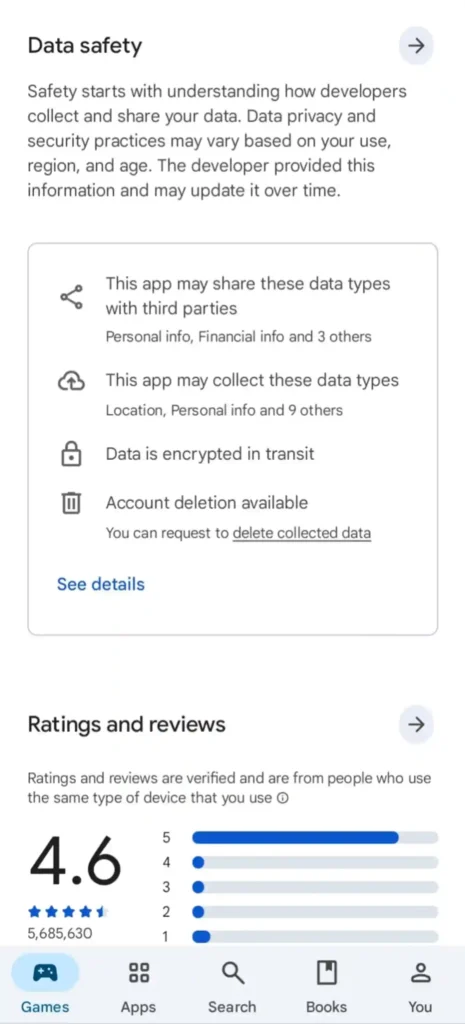
App stores now require developers to disclose device data collection. These disclosures appear as privacy labels before you install an app. You can read them before downloading anything.
3. Gameplay and Behavioral Data
Gameplay analytics form the backbone of all game design decisions. Developers track session duration, retention metrics, and level progression. They also track currency balance, item purchases, and feature usage.
If 60 percent of players quit at a specific level, difficulty balancing becomes a measurable problem. Developers can fix it with real data instead of guessing. Every design decision in a live game is backed by this information.
I reviewed gameplay metrics for a puzzle game prototype once. Small tweaks in reward timing improved early retention significantly. That improvement was only visible because structured event tracking was in place.
4. Advertising Identifiers and Attribution Data
Free to play games almost always integrate advertising SDKs. These systems use Google Advertising ID on Android and IDFA on iOS. They also track impressions, click through events, and attribution metrics.
These identifiers help measure how well ad campaigns perform. They also help prevent ad fraud. Users can reset or disable advertising IDs through their device settings at any time.

On iOS apps must request explicit permission before tracking across apps. On Android users can limit ad personalization in settings. Platform rules around cross app tracking keep getting stricter every year.
5. Purchase and Transaction Records
In-app purchases are processed through platform billing systems. Developers receive transaction ID, purchase token, item identifier, price tier, and timestamp. They never receive your actual credit card details.
Sensitive financial information is handled entirely by the platform provider. The game studio only receives what it needs to verify the purchase. Developers validate transactions using secure APIs to prevent purchase spoofing.
6. Location Data
Precise GPS data is uncommon in most mobile games. It is only used when the game design specifically requires real world positioning. Most games only infer your general region through IP based geolocation.
This general location is used to route you to nearby servers. It also displays your local language and applies regional pricing. If precise location is needed the app must request permission and disclose it clearly.
How Player Data Is Used in Practice
Game Performance and Stability
Crash reports include stack traces, device configuration, and OS information. Engineers use this to reproduce and fix bugs efficiently. Without crash data fixing device specific problems is nearly impossible.
Balancing and Design Decisions
Retention curves and engagement funnels influence every feature update. Live service games rely on this continuous feedback loop. Data tells developers what is working and what is driving players away.
Fraud Detection and Anti-Cheat Systems
Unusual patterns trigger automated checks immediately. Impossible currency gains or abnormal login behavior get flagged fast. Device fingerprints and server side validation protect the entire in-game economy.
Personalization Within Platform Limits
Some games tailor in-game offers based on your progression or spending history. This personalization must comply with store policies and regional privacy laws. It cannot cross certain boundaries set by platforms and regulators.
Regulatory Frameworks Affecting Mobile Game Data
Several major regulations shape how player data is handled globally. GDPR covers players in the European Union. CCPA covers players in California. COPPA covers children under 13 in the United States.
Under these frameworks players can request access to their data. They can also request deletion and withdraw consent in certain situations. These are legal rights that developers must respect.
Games targeting children must obtain verified parental consent before collecting any personal information. This is not optional. Violating these laws carries significant financial penalties.
Data Security Practices Used by Reputable Developers
Reputable developers use HTTPS encryption for all data transmission. They use secure cloud hosting environments and role based access control for internal staff. Server side validation of gameplay actions adds another layer of protection.
Regular security audits help catch vulnerabilities before they are exploited. Larger studios maintain dedicated security teams for this reason. Breaches damage both reputation and revenue simultaneously.
Smaller studios often rely on established backend services with built in security. Using trusted platforms reduces the risk of poor implementation. Security is not something good developers leave to chance.
Common Misconceptions About Player Data
Many players believe every game records microphone or camera input constantly. This only happens if the feature specifically requires it and you grant permission. No permission means no access. Period.
Some players think developers can see their raw payment details. This is completely false. Billing providers handle all sensitive financial data and developers never see it.
Others assume all collected data is automatically sold to third parties. Data sharing practices vary widely and must be disclosed in privacy policies. Transparency requirements have increased significantly in recent years.
Practical Steps Players Can Take
Review privacy labels before installing any new game. They are visible on the app store page before you download anything. Five minutes of reading can reveal a lot about what an app actually does.
Reset your advertising ID periodically through your device settings. Deny unnecessary permissions when an app requests them. Avoid linking multiple social accounts to a single game unless you truly need to.
Submit data access or deletion requests where applicable. Most major platforms and developers must legally respond to these requests. You have more control than most players realize.
Industry Direction: Reduced Tracking and On-Device Processing
The mobile ecosystem is gradually shifting toward greater privacy. Aggregated data is replacing individual user tracking in many systems. Contextual advertising is replacing personalized ad targeting in many cases.

On-device analytics processing is growing significantly. This means data is analyzed on your phone instead of being sent to a server. Stronger consent prompts are also becoming standard across all major platforms.
Studios that minimize unnecessary tracking earn better long-term user trust. Privacy is increasingly treated as a product feature. It is no longer just a legal compliance requirement.
Also Read: On-Device AI in Smartphones: Privacy, Security And Future
Also Read: AI in App Security: Threat Detection & Prevention Systems
Conclusion
Player data in mobile games is not going away. It is too important for the systems that make modern games work. But understanding what is collected puts you in control.
Account data enables your cloud saves and purchases. Device data helps developers fix crashes. Gameplay data improves the games you love. Transaction data keeps your purchases secure.
The key is knowing your rights and using the tools available to you. Review permissions. Reset advertising IDs. Read privacy policies before installing. These small habits make a real difference.
Data collection in mobile games is a reality. But it does not have to feel like something happening to you. Now that you understand it, you can manage it on your own terms.
Frequently Asked Questions
Do mobile games collect personal information?
Some games collect account details like email or username when registration is required. Payment information is processed by platform billing systems and never by individual game developers. You can check exactly what is collected in the privacy label before installing.
Can I stop a game from tracking advertising data?
Yes you can reset or disable advertising identifiers in your device settings anytime. On iOS you can deny cross app tracking permission when the app requests it. On Android you can limit ad personalization through your Google account settings.
Why do free games rely on data analytics?
Analytics help developers measure engagement, fix bugs, and balance difficulty. They also support ad based revenue models that keep the game free to download. Without analytics free games would not be financially sustainable for developers.
Are children’s mobile games allowed to collect data?
They must comply with strict child privacy laws like COPPA in the United States. Most require verified parental consent before collecting any personal information from children. Violations carry serious financial penalties for developers.
How long is player data stored?
Retention periods depend on operational, legal, and contractual requirements. Responsible developers delete or anonymize data when it is no longer needed. You can request deletion of your data under GDPR or CCPA if applicable to your region.