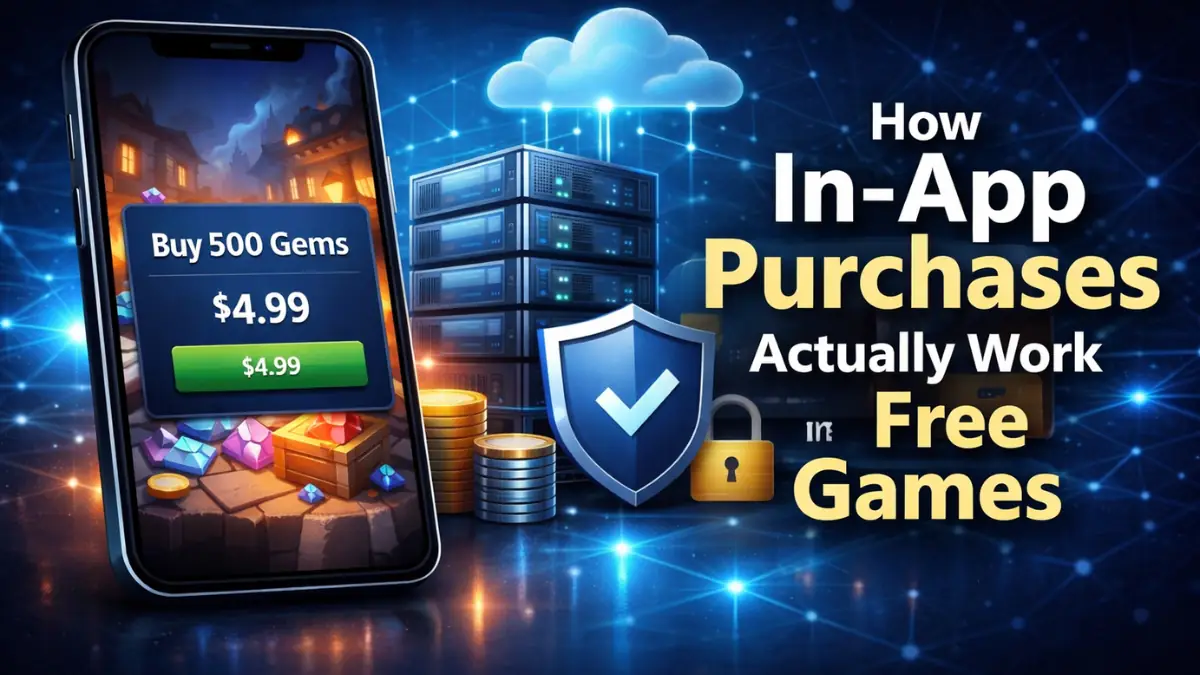
Free games are everywhere. You download them in seconds, start playing immediately, and often spend weeks or even months enjoying them without paying anything upfront. Yet many of these games generate significant revenue. To truly understand how in app purchases actually work in free games, we need to look at the technical infrastructure, platform rules, financial structure, and consumer protections that make this model possible.
This article breaks down the real mechanics behind in-app purchases are not just the surface explanation, but the backend process, revenue distribution, compliance requirements, and design considerations that shape how modern free games operate.
The Foundation: The Free-to-Play Business Model
Free-to-play (F2P) games allow users to download and access the core experience without an upfront payment. Instead of charging every player at the start, developers rely on optional purchases inside the game.
These purchases are processed through official app store billing systems. On mobile devices, developers are required to use the platform’s integrated payment infrastructure when selling digital goods inside their apps.
This system benefits developers because it handles:
- Payment processing.
- Currency conversion.
- Fraud monitoring.
- Tax collection in many regions.
- Secure receipt generation.
In exchange, the platform takes a commission on each transaction.
What Exactly Is an In-App Purchase?
An in-app purchase is a digital product bought inside a game. These purchases usually fall into four main categories:
1. Consumables
Consumables can be used once and bought again. Examples include:
- Virtual currency (coins, gems, tokens).
- Extra lives.
- Energy refills.
These are commonly used in progression based games.
2. Non-Consumables
These are one-time purchases that permanently unlock something in the game, such as:
- Ad removal.
- Premium mode access.
- Permanent character unlocks.
Once purchased, the user retains access across devices (when logged into the same account).
3. Subscriptions
Subscriptions provide recurring benefits in exchange for a monthly or yearly fee. These may include:
- VIP perks.
- Exclusive content.
- Battle passes.
- Ongoing bonuses.
Subscriptions renew automatically unless canceled by the user.
4. Cosmetic Items
Cosmetics change the appearance of characters or equipment but do not directly affect competitive balance. These include:
- Character skins.
- Outfit variations.
- Visual effects.
- Emotes.
Many modern games prioritize cosmetic monetization to avoid pay-to-win criticism.
Step-by-Step: How In App Purchases Actually Work in Free Games
To understand how in app purchases actually work in free games, we need to examine the full transaction process.
Step 1: Product Setup by the Developer
Before anything is sold, the developer creates digital products in the app store’s developer dashboard. Each item includes:
- A unique product ID.
- Assigned pricing tiers.
- Availability regions.
- Tax classification.
These product IDs are hard-coded into the game so the app knows what to request during a purchase.
Step 2: Player Initiates a Purchase
When a player taps the purchase button, the game does not directly charge their credit card. Instead, it calls the platform’s billing API.
The billing system opens a secure payment window that displays:
- The item name.
- The price in local currency.
- Payment method on file.
The user must confirm the purchase.
Step 3: Platform Authorization
The app store verifies:
- The user’s account.
- The validity of the payment method.
- Fraud risk signals.
- Regional pricing rules.
If everything checks out, the platform processes the transaction.
Step 4: Receipt Generation
After successful payment, the platform generates a purchase receipt or transaction token. This receipt serves as proof of purchase.
Step 5: Receipt Validation
The game sends the receipt to its backend server for verification. Server-side validation is considered best practice because it reduces fraud and prevents fake purchase confirmations.
The server confirms the receipt with the platform and, once validated, updates the player’s account.
Step 6: Content Delivery
After validation, the purchased item is granted to the player. This may involve:
- Adding currency to the account.
- Unlocking a feature flag.
- Updating subscription status.
All of this typically happens in seconds.
Revenue Sharing and Platform Commission
A key part of how in app purchases actually work in free games is revenue distribution.
When a digital purchase is made through an official app store, the platform takes a commission. Historically, standard commission rates have been around 30%, though reduced rates may apply for small developers or subscription renewals under specific programs.
The commission covers:
- Payment processing fees.
- Global distribution infrastructure.
- Security systems.
- Store hosting and discovery tools.
- Regulatory compliance handling.
The developer receives the remaining portion after platform fees and applicable taxes.
Why Only a Small Percentage of Players Pay
In most free-to-play games, the majority of players never make a purchase. Revenue is typically generated by a smaller segment of highly engaged users.
Because of this reality, developers focus heavily on:
- Long-term engagement.
- Fair progression pacing.
- Optional value-based offers.
A game that pressures every player to spend money usually struggles with retention and reputation.
Security, Fraud Prevention, and Refunds
Digital transactions attract fraud attempts. Common risks include:
- Stolen credit cards.
- Unauthorized purchases by minors.
- Fake purchase receipts.
To reduce these risks, platforms use:
- Encrypted payment systems.
- Account authentication.
- Fraud detection algorithms.
- Refund request workflows.
Developers also implement server-side validation to confirm every high-value purchase before delivering rewards.
Refund policies vary by region and platform. When a refund is issued, the platform may notify the developer, and the digital goods can be revoked from the account.
Regional Pricing and Tax Compliance
Digital goods are subject to local tax laws. Depending on the region, this may include VAT, GST, or state level sales tax.
App stores handle much of the complexity of tax collection and remittance. Developers select pricing tiers, and the platform adjusts final pricing based on local rules.
Regional pricing adjustments also reflect purchasing power differences between countries.
Game Design and Ethical Monetization
Monetization design plays a major role in how in app purchases actually work in free games.
Responsible developers aim to:
- Avoid misleading pricing.
- Clearly display subscription terms.
- Prevent accidental purchases.
- Maintain competitive fairness.
Games that rely heavily on aggressive monetization tactics often face player backlash, negative reviews, and platform scrutiny.
Ethical monetization focuses on value rather than pressure.
Key Metrics Developers Track
To sustain a free game, developers monitor performance metrics such as:
- Average Revenue Per User ARPU.
- Conversion rate percentage of paying users.
- Retention rate how long players stay active.
- Lifetime value total revenue per user over time.
These metrics help studios balance profitability with user satisfaction.
Also Read: Why Android Apps Crash Frequently (And Proven Ways to Fix Them)
Also Read: Why Some Mobile Games Require Internet Even for Single Player
Final Thoughts
Understanding how in app purchases actually work in free games requires looking at both technology and business. Behind every purchase button is a structured system involving platform billing APIs, fraud checks, tax compliance, receipt validation, and backend account updates.
Free games are not cost-free to operate. They require servers, updates, support teams, and security infrastructure. In-app purchases make that ongoing development financially sustainable while keeping the initial download accessible to everyone.
When implemented transparently and responsibly, this model allows developers to maintain their games long term without forcing upfront payment from every player.
Frequently Asked Questions
1. Are in-app purchases mandatory to complete a free game?
No. In most well-designed free games, in-app purchases are optional. While spending may speed up progress or unlock cosmetic items, the core experience is typically accessible without payment.
2. How secure are in-app purchases?
Transactions are processed through encrypted payment systems managed by official app stores. Developers do not directly handle credit card details. Additional server-side receipt validation adds another layer of protection.
3. Can players get refunds for in-app purchases?
Refund policies depend on the platform and region. Most major app stores provide a process to request refunds within a limited timeframe. If approved, the purchased digital goods may be removed from the account.
4. Why do some games sell virtual currency instead of direct items?
Virtual currency allows developers to create flexible pricing structures and bundle offers. It also simplifies international pricing because currency packs can be standardized while item prices remain consistent inside the game economy.
5. Do developers control subscription cancellations?
No. Subscriptions are managed through the app store account settings. Users must cancel through their platform account, not directly inside the game. Developers receive notification when a subscription expires or renews.