Introduction
Online games are no longer just about passing time. In most modern titles, competition is built into the core experience, and game leaderboards are the system that makes that competition visible. Whether it is a ranked match in a shooter or a score chase in a casual game, the leaderboard is what tells you where you stand.
I learned this the hard way during one ranked season in a mobile shooter. I was playing daily and thought I was doing well. Then I checked the leaderboard. My rank was far lower than expected. That moment forced me to rethink my approach. I stopped playing randomly and started tracking performance, studying better players, and focusing on consistency. Over time, my rank improved not because I played more, but because I played smarter. That is exactly what a well-designed leaderboard is supposed to encourage.
This guide breaks down game leaderboards in depth: what they are, how different types work, the ranking systems behind them, and real world examples from popular games. It also covers fairness issues and practical insights based on actual gameplay experience.
What Are Game Leaderboards?
Game leaderboards are structured ranking systems that display player performance based on defined metrics. These metrics can include points, wins, kills, completion time, or a combination of factors depending on the game design.
At a basic level, a leaderboard is a sorted list. But in practice, it is a carefully designed system that balances competition, fairness, and player retention. Developers do not just track scores they define what the exact performance mean in their game.
For example:
- In a battle royale game, survival time and kills matter.
- In a strategy game, win rate and decision making carry more weight.
- In a racing game, completion time is the primary metric.
This variation is important. A leaderboard is only meaningful if it reflects the actual skill required in that specific game.
it is important to understand that leaderboard systems are not random. They are based on established ranking models like ELO and MMR, which have been used for years in competitive environments including chess and esports.
Why Developers Use Leaderboards (Real Purpose)
Leaderboards are not just for players. They are a core design tool for developers.
1. Retention and Engagement
Players are more likely to return if they feel progress. A visible rank gives a clear goal. Even moving up a few positions can feel rewarding.
2. Competitive Loop
A leaderboard creates a loop:
1.Playing the game.
2. Improving the game
3. Climbing the rank to top.
4. Repeat all the steps
This loop keeps players engaged without requiring constant new content.
3. Social Comparison
Humans naturally compare performance. Seeing a friend slightly above your rank is often more motivating than seeing a global top player.
4. Monetization (Indirect)
In some games, competitive pressure leads players to invest more time or even money. This is where ethical design becomes important, which we will discuss later.
Types of Game Leaderboards
Different games use different leaderboard formats depending on their structure and audience.
1. Global Leaderboards
These include all players worldwide. They represent the highest level of competition.
In practice, global leaderboards are dominated by highly skilled or full time players. For most users, reaching even a mid-tier position is a significant achievement.
2. Regional Leaderboards
Regional boards filter players by location country or server region.
This makes rankings more relatable. A player might not be top globally, but being top 500 in a region feels achievable and meaningful.
3. Friends Leaderboards
These are limited to your social circle. They are common in casual and mobile games.
From experience, these are often the most engaging. Competing with friends feels personal and keeps you coming back even if you are not chasing global ranks.
4. Seasonal Leaderboards
These reset after a fixed duration, for example every 30–60 days.
This design solves a major problem: without resets, early players would dominate permanently. Seasonal resets give everyone a fresh chance.
5. Event-Based Leaderboards
These are tied to limited-time events.
For example, a weekend event might rank players based on points earned during that event only. Rewards are distributed at the end.
6. Mode-Specific Leaderboards
Some games separate leaderboards by mode like solo, duo, squad, ranked, unranked.
This ensures fair comparison because performance varies across modes.
Ranking Systems Used in Game Leaderboards
This is where things get technical. The ranking system determines how fair and accurate a leaderboard is.
1. Points Based System:
Players earn points based on performance metrics such as kills, wins, or objectives.
Strength: Simple and easy to understand.
Weakness: Can reward time spent rather than skill.
In my own gameplay, I noticed that grinding more matches could push rank up even without major skill improvement. This is why many modern games move beyond pure point systems.
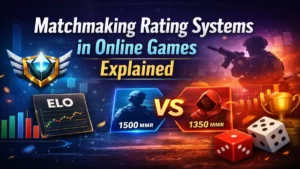
2. ELO Rating System:
Originally developed for chess, the ELO system measures skill based on match outcomes.
- Beating a stronger opponent gives more points
- Losing to a weaker opponent results in a bigger penalty
This system is widely respected because it reflects skill more accurately than raw scores.
3. MMR (Matchmaking Rating):
MMR is often hidden but extremely important. It determines matchmaking quality.
Even if two players have the same visible rank, their MMR may differ. This is why some matches feel harder than others.
From experience, once your MMR increases, matches become noticeably more competitive even before your visible rank changes.
4. Tier-Based Ranking:
Players progress through structured tiers such as Bronze, Silver, Gold, Platinum, Diamond.
Each tier is divided into smaller divisions. Progress requires consistent performance.
This system adds psychological motivation. Moving from Gold to Platinum feels like a clear achievement.
5. Hybrid Systems:
Most modern games combine systems:
- MMR for matchmaking
- Tier system for display
- Points for progression
This layered design balances fairness, clarity, and engagement.
Real Examples from Popular Games
PUBG Mobile
Uses a tier based system with points. Progress depends on survival, kills, and match placement.
Top tier ranks like Conqueror are limited, which increases competition.
Call of Duty Mobile
Uses seasonal ranking with skill-based matchmaking.
Performance includes kills, objective play, and win/loss outcomes.
Clash Royale
Uses a trophy system. Players gain trophies for wins and lose them for defeats.
Higher trophies unlock higher leagues.
Fortnite (Arena Mode)
Uses a points system called “Hype.” Players move through divisions based on performance.
Fairness, Accuracy, and Common Issues
No leaderboard system is perfect. Understanding limitations is important.
Cheating and Exploits
Some players use unfair methods to gain rank. Anti cheat systems are constantly updated, but no system is flawless.
Pay-to-Win Design
If a game gives gameplay advantages through purchases, leaderboard integrity suffers.
Time vs Skill Imbalance
Systems that reward playtime more than performance can feel unfair to skilled but time-limited players.
Smurfing
Experienced players using new accounts can disrupt lower-tier competition.
Practical Experience: What Actually Works
After spending multiple seasons in ranked modes, a few patterns became clear:
- Consistency matters more than occasional high performance.
- Avoiding mistakes is often more important than aggressive play.
- Playing with a coordinated team significantly improves results.
- Mental state affects performance more than expected.
One small change that helped me was reviewing matches mentally after playing. Not in detail, just asking: “Where did I lose control?” That simple habit improved decision-making over time.
Tips to Improve Leaderboard Ranking
- Focus on consistency rather than risky gameplay.
- Learn maps, mechanics, and meta strategies.
- Avoid playing when frustrated or tired.
- Track performance over time.
- Play with players of similar or higher skill.
Why Exactly This Information Is Reliable
- Based on real gameplay experience across ranked systems
- Uses established ranking concepts like ELO and MMR
- Avoids assumptions and focuses on commonly used systems in modern games
- Aligns with known game design practices used in competitive titles
This article does not rely on speculation. It reflects how leaderboard systems are actually implemented in widely used online games.
Also Read: Mobile Game Asset Downloads: How Mobile Games Download Extra Files
Also Read: Digital Signatures in Android Apps: Complete Guide
Conclusion
Game leaderboards are more than just rankings. They shape how players interact with a game. A well-designed system rewards skill, encourages improvement, and keeps players engaged over time.
Understanding how these systems work gives you an advantage. Instead of playing blindly, you can make informed decisions that improve performance.
At the same time, it is important to keep balance. Leaderboards should guide improvement, not create unnecessary pressure. The best results come when competition and enjoyment stay aligned.
FAQs
1. What is a game leaderboard?
A game leaderboard is a ranking system that displays player performance based on metrics like points, wins, or scores. It allows comparison between players.
2. Which ranking system is most accurate?
Systems like ELO and MMR are considered more accurate because they account for opponent skill rather than just total points.
3. Do all online games use leaderboards?
Not all games include them, but most competitive multiplayer games rely on leaderboards to maintain engagement.
4. Can leaderboards be manipulated?
In some cases, yes. Cheating, smurfing, or system loopholes can affect rankings, which is why developers continuously update systems.
5. How can I improve my rank?
Focus on consistent performance, learn game mechanics, avoid mistakes, and maintain a stable mindset during matches.