
Introduction
So, mostly You queue up for a ranked match. Everything feels normal at first. Then someone kills you through a solid wall from 300 meters away.
You watch the kill cam. Their aim snaps perfectly to every target instantly. They move through areas that should be completely blocked. They know exactly where every player is hiding at all times. That player is cheating. And it is ruining your experience completely.
Cheating in mobile games is a massive problem. It destroys competitive integrity. It drives honest players away from games they love. It costs game companies millions in lost revenue every single year.
I experienced this firsthand during a ranked push in Call of Duty Mobile last year. Three matches in a row had obvious cheaters in the final circle. All three times I lost rank points to someone using software that should not exist. That experience made me research exactly how games try to stop this from happening.
This article explains everything about anti-cheat systems in mobile games. How they work, why cheaters still get through, and what the future of fair gaming actually looks like.
Why Cheating in Mobile Games Is Such a Big Problem
Mobile gaming reached over 2.5 billion players worldwide. That massive audience attracted not just honest players but also a thriving industry of cheat developers selling hacks for profit.

Aimbots lock your crosshair automatically onto any enemy within range. Wallhacks reveal every player’s position through solid walls and terrain. Speed hacks move characters faster than the game physics allow. Damage hacks increase weapon damage beyond any legitimate maximum. Auto-fire scripts pull triggers faster than any human finger physically can.
These cheats are not difficult to find. They are sold openly on websites, Telegram channels, and underground forums. Monthly subscription prices range from a few hundred to a few thousand rupees depending on the game and features included.
The impact on honest players is immediate and devastating. Ranked matches become unwinnable against cheaters. Trust in the competitive system collapses. Long term players quit games they invested years into because the experience becomes completely pointless.
Game companies lose real money when cheating drives players away. They also face reputational damage that affects new player acquisition. Anti-cheat systems are not optional features. They are critical infrastructure that determines whether a competitive game survives long term.
How Anti-Cheat Systems Actually Work
Anti-cheat systems use multiple detection layers working simultaneously. No single method catches everything. The best systems combine many approaches so cheaters must defeat all of them at the same time to avoid detection.
Client Side Detection
Client side detection runs directly on your phone while you play. The anti-cheat software monitors your device in real time looking for signs of cheating tools running alongside the game.
It scans running processes on your device and checks for known cheat software signatures. It monitors game memory for unauthorized modifications to values that should never change during legitimate gameplay. It checks whether game files match the official versions stored on the server exactly.
It also monitors system calls your device makes during gameplay. Legitimate gameplay generates predictable patterns of system activity. Cheat software creates unusual system call patterns that trained detection systems recognize as suspicious immediately.
PUBG Mobile uses a client side system that scans device processes every few minutes during active sessions. Free Fire runs integrity checks on game memory continuously throughout every match. These checks happen silently in the background without players ever knowing they are occurring.
The weakness of client side detection is that sophisticated cheaters know exactly what the anti-cheat software looks for. They design their cheat tools to avoid creating the specific signatures and patterns that trigger detection. It becomes an ongoing cat and mouse race between cheat developers and anti-cheat engineers constantly.
Server Side Validation
Server side validation is fundamentally more reliable than client side detection because cheaters cannot access or modify the server directly. The server independently validates every action players take during matches.
When you fire a weapon the server checks whether that shot was physically possible given your position, the weapon’s fire rate, and the game’s physics rules. When you move the server verifies that your new position is reachable from your previous position within the laws of the game world. When you deal damage the server confirms the damage value falls within legitimate boundaries for your weapon and situation.
Actions that fail server validation get rejected regardless of what your local game client processed. A damage hack making your weapon deal 10,000 damage per shot gets rejected by the server because that value is impossible for that weapon legitimately. The shot simply does not register on the server’s authoritative game state.
Server side validation catches many obvious cheats completely automatically without requiring any pattern recognition or signature matching. The physics and rules of the game itself become the detection mechanism. Breaking game rules is the detection trigger.
The limitation is that server validation cannot catch everything. Aimbots do not break game rules directly. A human could theoretically aim as accurately as an aimbot, just not consistently across thousands of shots. The server sees legitimate aim inputs and legitimate damage values and has no direct way to know a human was not responsible.
Behavioral Analysis and Machine Learning
This is where modern anti-cheat systems become genuinely sophisticated. Machine learning models analyze player behavior patterns across millions of data points to identify statistical impossibilities that indicate cheating even when individual actions appear legitimate.
An aimbot produces aim patterns that are statistically impossible for human players at any skill level. The snap speed from one target to another exceeds human reaction time limits by measurable amounts. The consistency of headshot accuracy across hundreds of engagements falls outside any distribution of human performance data ever recorded.
Machine learning models trained on millions of legitimate matches know exactly what human performance distributions look like at every skill level from complete beginner to world class professional. When a player’s behavioral data falls outside those distributions by significant margins the model flags them for review automatically.
Movement analysis works the same way. Legitimate players make movement micro-corrections that create specific patterns. Cheating software produces unnaturally perfect movement without the micro-corrections human motor control naturally introduces. These differences are invisible to human observers but statistically obvious to trained machine learning models.
I read a technical breakdown of how one major game’s anti-cheat team caught a sophisticated aimbot that had evaded signature detection for weeks. The aimbot developer had added artificial jitter to simulate human aim wobble. But the jitter pattern itself was algorithmically generated and statistically different from genuine human jitter. The machine learning model caught the artificial pattern within hours of the cheat releasing.
Device Integrity Verification
Mobile games specifically benefit from device integrity checks that PC games cannot use as effectively. Both Android and iOS provide system level attestation that verifies whether a device has been modified from its standard configuration.
Google Play Integrity API on Android checks whether the device is running a certified unmodified Android installation. It checks whether the specific app has been tampered with since installation. It checks whether the device has been rooted in ways that allow memory modification and process injection. Results get sent to the game server for evaluation alongside gameplay data.
Apple’s equivalent systems on iOS perform similar verification. iOS devices have stricter modification restrictions by default which is one reason iOS gaming environments generally experience less cheating than Android environments.
Rooted Android devices and jailbroken iPhones can modify game memory, inject code into running processes, and bypass many client side protections entirely. Device integrity checks identify these modified environments and either restrict gameplay or flag accounts for enhanced monitoring immediately.
Many games now refuse to run at all on rooted devices. Others run but immediately flag the account for intensive monitoring. Players who root their devices for legitimate customization reasons sometimes face consequences from anti-cheat systems targeting cheater infrastructure.
Report System and Human Review
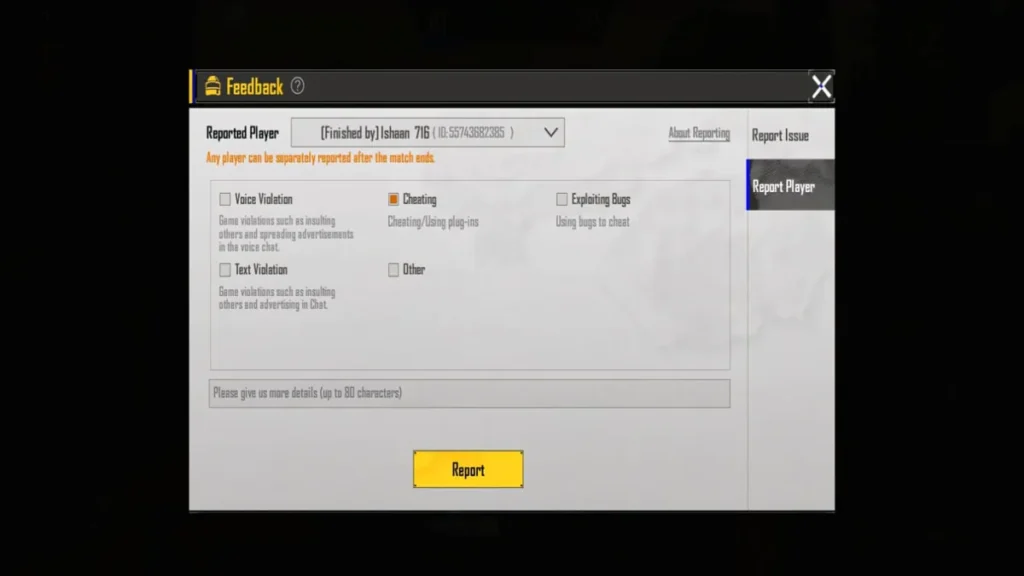
Automated systems catch the majority of cheaters but miss sophisticated ones that stay just within detectable thresholds. Human report systems provide a supplementary layer that catches what automation misses.
When multiple players report the same account within a short time window it triggers priority review by automated systems and sometimes human reviewers. Consistent reports from verified legitimate players carry more weight than reports from accounts with suspicious histories themselves.
The challenge with report systems is abuse. Players angry about losing fair matches sometimes report skilled players as cheaters out of frustration or spite. Anti-cheat systems must weight reports carefully to distinguish genuine community reporting from frustrated false reporting.
PUBG Mobile and Call of Duty Mobile both show players confirmation messages when someone they reported receives a ban. This feedback loop encourages continued legitimate reporting by showing players their reports actually produce results. Without that feedback most players stop reporting because they never see any evidence their reports matter.
Why Cheaters Still Get Through
Despite sophisticated multi-layer anti-cheat systems cheaters still appear in games regularly. Understanding why helps you understand the genuine difficulty of the problem game companies face.
The Detection Delay Problem
Anti-cheat systems rarely ban cheaters in real time during the match where they cheat. Detection systems collect data, analyze patterns, confirm suspicions across multiple sessions, and then issue bans in waves. This process takes hours to days even for obvious cheating.
The delay exists to prevent false bans on legitimate players. An aggressive system that bans instantly based on single match data would inevitably ban skilled legitimate players whose statistics briefly resemble cheat patterns. The cost of false banning paying legitimate customers is considered higher than the cost of delayed cheat detection.
Cheaters exploit this delay deliberately. They use cheats in short sessions to minimize detection data accumulation. They alternate between cheating and clean sessions to muddy their behavioral statistics. They abandon accounts when detection seems imminent and create new ones immediately.
New Cheat Development Outpaces Detection
Every time a game company updates their anti-cheat system cheat developers analyze the update and modify their tools to avoid the new detection methods. This cycle repeats continuously with no permanent resolution possible for either side.
Cheat developers have financial incentive to stay ahead of detection. Their subscription revenue depends on their cheats working consistently. They monitor anti-cheat updates closely and release detection avoidance patches quickly. Some sophisticated cheat operations test against anti-cheat systems continuously and push updates within hours of detection method changes.
The game company must build detection for cheat behaviors they may not even know exist yet. Cheat developers only need to stay one step ahead of the specific detection methods currently deployed. The asymmetry favors cheat developers in ongoing development cycles.
Emulators and Modified Environments
Many mobile game cheats run on PC through Android emulators rather than on actual phones. Emulated environments are more modifiable than real device environments. Memory access, process injection, and game file modification are all easier in emulated environments than on actual hardware.
Game companies detect emulator usage and restrict it in competitive modes but cannot always distinguish legitimate emulator users from cheating emulator users reliably. Sophisticated emulator configurations can pass basic integrity checks by spoofing device identifiers and system signatures.
The Best Anti-Cheat Systems in Mobile Gaming
Some games handle cheating dramatically better than others. The difference comes down to investment, technical sophistication, and organizational commitment to competitive integrity.
PUBG Mobile and Tencent’s Anti-Cheat
PUBG Mobile uses a multi-layer system combining real time device scanning, server side physics validation, machine learning behavioral analysis, and a dedicated security team. Tencent issues ban waves publicly with total numbers to demonstrate scale of enforcement.
Their system catches millions of cheaters monthly according to their public reports. They also maintain a dedicated security research team that proactively hunts new cheat tools before they become widespread. The response time from new cheat release to detection update is measured in days for major cheat categories.
Garena Free Fire’s Approach
Free Fire uses Garena’s proprietary anti-cheat system combined with machine learning models trained specifically on Free Fire’s gameplay patterns. Their system places heavy emphasis on behavioral analysis because Free Fire’s fast paced gameplay makes physics validation more complex.
They run regular ban waves with public announcements and have implemented account linking requirements that make creating new accounts after bans more difficult. Phone number verification for ranked play reduces throwaway account creation significantly.
Call of Duty Mobile’s Ricochet System
Activision brought elements of their PC Ricochet anti-cheat system to Call of Duty Mobile. Ricochet operates at a deep system level examining game memory and process activity more thoroughly than surface level scanning approaches.
Call of Duty Mobile also uses machine learning models trained on professional player data to establish accurate performance ceilings. Behavioral patterns exceeding those ceilings trigger immediate enhanced monitoring regardless of whether specific cheat signatures are detected.
What Honest Players Can Do
You cannot fix anti-cheat systems yourself. But you have meaningful options for protecting your competitive experience.
Report Every Suspected Cheater Immediately
Never skip the report process out of frustration or assumption that it does not matter. Every report contributes data to detection systems. Multiple reports from multiple players accelerate review and ban processes significantly.
Report immediately after the match while the session data is fresh and most relevant to investigators. Include specific details about what you observed whenever the report system allows text input. Vague reports are less actionable than specific ones describing exactly what suspicious behavior you witnessed.
Use Replay Features to Verify Before Reporting
Most competitive mobile games include replay systems. Watch replays before reporting to confirm actual cheating rather than reporting genuinely skilled players out of frustration.
A player with excellent positioning, fast legitimate aim, and superior game knowledge can appear to be cheating to less experienced players. Watching their perspective in the replay often reveals legitimate skill rather than software assistance. Report confidently when the replay confirms impossible behavior. Do not report when the replay shows impressive but human performance.
Choose Games with Strong Anti-Cheat Reputations
Your long term game choice should factor in the developer’s demonstrated commitment to anti-cheat enforcement. Games with regular public ban wave announcements, transparent communication about security updates, and responsive community engagement on cheat reports are worth your time investment.
Games that never communicate about cheating, show the same obvious cheaters repeatedly, and ignore community security reports are signaling that competitive integrity is not a genuine priority. Investing time and money into those games rewards developers who do not deserve it.
The Future of Anti-Cheat in Mobile Games
Anti-cheat technology is advancing faster than it ever has. Several developments will significantly change the effectiveness of cheat detection within the next few years.
Hardware level attestation is becoming more sophisticated on both Android and iOS. Future device verification will make it nearly impossible to run modified game environments without immediate and certain detection. The hardware itself will become an unforgeable certificate of legitimate gameplay conditions.
AI behavioral models are becoming more accurate as training datasets grow larger. Models trained on billions of gameplay sessions develop extremely precise understanding of human performance distributions. The statistical gap between human play and assisted play becomes increasingly detectable even when cheats are designed to mimic human patterns closely.
Cross game account identity systems are being developed that track bad actors across multiple titles simultaneously. A banned cheater in one game faces faster detection and stricter monitoring in other games from the same publisher. Making the account the permanent identity rather than the device or phone number closes many account cycling loopholes cheaters currently exploit freely.
Also Read: Game Response Delay During High Server Load: Causes and Easy Fixes
Also Read: Everyday Tasks Controlled by AI in Mobile You Didn’t Even Notice
Conclusion
Anti-cheat systems in mobile games are complex multi-layer defenses fighting a continuous battle against well-funded and technically sophisticated opponents. Client side detection, server side validation, machine learning behavioral analysis, device integrity verification, and human review systems all work together to protect competitive integrity.
No system is perfect. Cheaters still get through. Detection delays mean honest players sometimes lose matches to cheaters before bans happen. New cheat tools require new detection methods in a cycle with no permanent end.
But the systems are genuinely improving. Machine learning is making behavioral detection more accurate every year. Hardware attestation is closing modification loopholes that have existed since mobile gaming began. Game companies investing seriously in security infrastructure are winning more battles in this ongoing war than they are losing.
Understanding how these systems work makes you a more informed player. You know why some matches feel wrong. You know what to do when you encounter cheaters. You know which games take competitive integrity seriously and which ones do not.
Play fair. Report cheaters. Choose games that fight back. That combination is the most powerful anti-cheat tool available to any honest player right now.
FAQ’s
Why do cheaters not get banned during the match they are cheating in?
Anti-cheat systems collect behavioral data across multiple sessions before issuing bans to prevent false positives on legitimate players. Real time bans based on single match data would inevitably punish skilled honest players whose statistics briefly resemble cheat patterns. The delay is a deliberate design choice prioritizing accuracy over speed of enforcement even though it means honest players sometimes lose matches to cheaters before bans are issued.
Does playing on iOS give you a fairer experience than Android in mobile games?
iOS environments are generally more resistant to cheating than Android because iOS has stricter restrictions on memory modification and process injection by default. Rooting Android devices is more accessible than jailbreaking iOS devices which reduces the population of modified device environments available for cheat software deployment.
Can VPNs help cheaters avoid anti-cheat detection?
VPNs can mask a player’s geographic location and IP address but cannot hide behavioral data patterns that machine learning systems analyze. Server side validation and behavioral analysis operate on gameplay data rather than network identity information. A VPN does not make impossible aim patterns look human or make physics violations pass server validation. Sophisticated anti-cheat systems focus on what players do rather than where their connection originates from.